(From the Russian version of “The Internacionale”)

A FICTION STORY
PROLOGUE: PETROGRAD, 1923
“Hakop, look what they write in Pravda,” Marietta shouted from the room to her husband, who, dressed in a long white chef’s apron, was conjuring in the kitchen.
“What good did you find there, tsavt tanem (dear)?” the home cook asked.
“Bukharin’s article calling on writers to create their own Red Pinkerton!”
“Why? The American one is not enough for him?”
“How can you say that? This is an appeal to me! Do you want a happy life? Then build it yourself! Do not be a fellow-traveler, an observer of a process, be its creator! Yes, I want to show to all America that our emancipated labor is ahead of their forced labor! And I’ll show it so well that Americans start asking, “Let us in to Russia!”
“Wah (Wow), she decided to show to all America! To outdo Kollontai!” thought the husband, but decided not to develop this thought aloud, but only remarked, “Djani (My dear), you are all in politics … What about the family, the daughter?”
“Yakov Samsonovich, have you forgotten our agreement? We live together only three months an year, and the rest of the time we are free birds!”
“I remember, I remember, my Persephone. I’ll rather take care of khashlama. Good food is not only a spiritual thing. Not even your Marx can argue that.”
Not even two years have passed since the book by Jim Dollar (Marietta Shaginyan) “Mess-Mend” was published in the USSR in a huge circulation and won the hearts of readers. It was not published in America, but Shaginyan’s prediction came true – ten years later, thousands of Americans rushed to the USSR. For the only time in the history of the United States, the outflow from the country exceeded the entry.
Two reasons existed for that. First – America was tormented by the Great Depression, and people were ready to work for food. The second – many were attracted by the propaganda of a happy life in the USSR as “Equality, Brotherhood, Labor for the benefit of all!” And what else one could have praised? The famine, the annihilation of Russian farming, mass trials, or slave labor in hard work camps for the construction of canals and hydroelectric power stations?
PRELUDE: SOLOVKI, 1929
“Aleksey Maximovich, I beg you, be careful up the ship’s ladder!”
A group of military men surrounded the great proletarian writer and led him almost arm-in-arm along the gangway to the ship. The sailors under the command of the captain had already lined up on the deck. Commander reported to the authorities from the NKVD and personally to Comrade Gorky, “The personal steamer Gleb Bokii, allocated by the government for the convenience of Comrade Gorky, is heading to the Solovetsky Islands to inspect the corrective labor colony!”
In the wardroom, a table had already been laid for six, namely: Gorky, his daughter-in-law Timosha, two high officials of the NKVD, the captain of the ship and his first mate. The reception of the guests was held at the highest level. The famous writer was a personal friend of Lenin and Stalin, and Timosha was a beauty that adorned any company. In the outfit of the “goddess of the NKVD” – all in black – a leather cap, jacket, riding breeches and high cowhide boots – she was irresistible.
There were two hosts today. Arvid Yakovlevich Martinelli, head of the new camp system and Gleb Ivanovich Bokii, head of the NKVD special department in charge of ciphers, poisons and parapsychology.
Food from the special distributor center was allocated to treat the dear guests. North Sea – therefore, northern food: smoked fish, salmon, sturgeon, caviar, pickles, the best brands of cognac and vodka. For hot dishes – fish soup and pies with delicatessens of different sort.
Can delicious food prevent the attentive sight of a thinker from distinguishing the truth from slander about Soviet life? Sure not, but, for extra reliability, the authorities carefully developed an introductory conversation.
“You see, Alexei Maximovich,” Martinelli began, “the Solovetsky Special Purpose Camp, or Solovetsky Tradition Of Reeducation Kindnesses, as its inhabitants good-naturedly call it, abbreviating to S.T.O.R.K., is a new, socialist way of turning opponents of Soviet power into its supporters. This is not tsarist hard labor, not white terror, this is re-e-du-cation, inevitably, like a large Stork pushing people with temporarily limited freedom to a new happy life for the benefit of the whole society!
Bokii entered the conversation, “Tell me, Alexei Maksimovich, what do you think, could the kulaks, opponents of collectivization, be allowed to hide food, slaughter livestock, cause mass starvation?”
This “simple” question was prepared in the department of parapsychology, in the same place where they developed methods of interrogation and psychological pressure on the people under investigation. The researchers were well aware of Gorky’s negative attitude towards the ignorant peasant masses, and the grain fell on the plowed soil.
“What a question, Gleb Ivanovich! You are not just an adamant Bolshevik, you are a crusher of our enemies!” exclaimed the writer.
Gorky, of course, did not know whom the Leninist Bokii preferred to crush during the Bolshevik orgies at the dacha-commune of Kochino.
“I’ve been saying for years that the Russian peasants possess particular cruelty, and suppressing it is a holy, no, the communist cause!” Gorky added enthusiastically.
“No, no, we do not suppress people or their feelings. We are reshaping them! This is the method of Marxism – temporary labor impact in order to improve a person. We, like Michurin, are creating a new breed. The breed of the Soviet man. This is a kind of artificial selection, science! Let’s drink to it. Anyway, you’ll soon see everything with your own eyes, Alexei Maximovich.”
On the pier in Solovki, the head of the camp, Alexander Petrovich Nogtev, and his deputies greeted dear guests, to the bravura sounds of the camp orchestra.
Along a beautiful alley of giant firs, they went to the central building of the former Solovetsky Monastery.
“Firs are marvelous! Like the cypresses in Capri,” the writer smiled.
“The main thing is that the alley is the result of the work of our storks,” Bokii remarked, “that’s how they fell in love with nature, realizing that the work of their hands is for the good of everyone!”
In fact, the fir trees were cut down in the forest, dragged under the whips on a sled and dug into the ground in the form of an alley – never mind, they will stand a few days.
Then Alexei Maksimovich was shown the libraries, the infirmary, workshops, art and handicraft products of the pupils. The camp inmates praised the conditions of detention with all their voices, repentantly told that they did not understand the greatness of labor before, but now they cannot live without it. Nogtev nodded his head approvingly. They called him “the executioner” in the camp. One wrong word or a sidelong glance was enough for him to shoot the intruder with his carbine. Of course, as soon as the guests leave.
The tortured and beaten were sent to remote working areas, and those who did not manage to be sent out of sight were laid down in a large pit and covered with a tarpaulin from the writer’s eyes. However, a couple of times a failure happened: a boy in a punishment cell, converted into a reading room, told the guest about the torture of camp inmates; a former revolutionary cellmate, who happened to meet him complained of torture and abuse. Gorky whispered to him: “Write to me about everything…” Did he understand that this was impossible? Did he answer that on purpose?
At a rally in Solovki, in front of a movie camera, Gorky publicly declared,
“I am not able to express my fillings in a few words. I don’t want to, and it would be a shame to fall into stereotyped praise of the amazing energy of people who, being vigilant and tireless guardians of the revolution, are able, at the same time, to be remarkably bold creators of culture. It seems to me – the conclusion is clear: such camps as Solovki is a necessity!”
“Clever man, our Petrel! Real proletarian mind! He understood everything and said everything that needed to be said,” Bokii praised mentally Gorky. “If I had known him better, I would not have been afraid to invite him to Kochino. Of course, with Timosha.”
But for now Bokii set aside sweet dreams. There were several hours to sail, it was time to properly treat themselves to what they received from communist Olympus.
In less than two years, the idea of camps, tested in Solovki, approved and praised by Gorky, was embodied in the vast expanses of Siberia in tens of thousands of places of detention. Poets and writers urged the people:
Gorky: “If the enemy does not surrender, he is exterminated!”
Platonov: “The proletarian should not be afraid of becoming a murderer and a criminal, destroying the bourgeoisie bodily!”
Mayakovski: “Come to a factory or a garage
Everywhere you hear, “Sabotage!”
However, the development of industry required qualifications. Foreign experts erected Nizhny Novgorod, Magnitogorsk, Stalingrad. Behind the giants of heavy engineering, steel, and the automotive industry, streams of American workers poured into the USSR…
BUILDING A NEW WORLD: GORKY, 1934
Today, both friends worked on the first shift at a newly built and launched car factory and returned home before dark.
Robert Smith and Michael Jones considered themselves lucky boys. You bet it! To lose a job in Detroit and find it five thousand miles away, in “Russian Detroit”, a city with a strange name Gorky meaning “bitter”. It was life in Detroit that became bitter, and business abroad turned out to be quite to taste.
Still recently, at home in Michigan, Bobby reasoned like this, “If Ford is not afraid to work with the communists, then why should we be afraid? And there’s nothing to lose. The stock exchange follows the leaders. And the proletarians, as they say there, unite!”
Mike, agreeing with Bob, had his own reasons. He really wanted to plunge into the bachelor life again, at least briefly. Daisy began to get fat and lazy, nagged him as if unemployment were the work of his hands. “Let her live alone, feel what it’s like to raise children without a husband.” Russian women excited him with their mystery, and he was happy to imagine romance with them, although he did not know their language.
If someone had predicted this a few years ago, his friends would have laughed in his face. In recent years, situation with the work has gotten worse and worse, and it ended with the fact that the staff of assembly line workers was severely cut, and Bobby and Mike were fired. The well-fed life of auto mechanic workers in one day turned into a headache: how to feed a family, pay for housing and a new car? Fortunately, Smith’s brother-in-law, Leon Rybak, a former immigrant from Russia, brought the news that Ford was building car factories in Russia, and soon they would be recruiting American workers for the assembly line in the city of Nizhny Novgorod.
The news shocked all of Detroit. Some tried to get into the team that the plant engineers were recruiting. Others were ready to sign a contract with a recruiter from the Russian Automotive Industry. And still others, who were not lucky with any of these two groups, discussed the chances to go to Russia as tourists and get settled themselves on the spot.
Friends could not make a deal with their engineer Miller, a kind man.
“I’m taking only a few first class mechanics with me, not assembly line workers. Try your luck in the Russian Autoprom (Automotive Industry).”
But Leon was against that choice. He said, “I do not believe in contracts with the Bolsheviks. They will deceive you. You’ll sign your contracts without fully understanding them and then you’ll bend your back for a pittance!”
“You know,” Robert suggested to a friend, “if we finally decided, we must not delay, but as soon as possible take third-class tickets on a ship and sail to England, from there to the Russian port of Leningrad, and then by train to Nizhny Novgorod.”
“But where to find the money for the trip?”
“I’m thinking of selling the car. There will still be no one to drive it in my absence.”
“And should I sell too? I have a brand new car.”
“Who will need it here without you? We’ll work in Russia for a couple of years… You know, they say the salary there is higher than here, housing and lunch at work are free. So we’ll save some money and buy new models.”
“Sounds tempting, but I’m afraid, Daisy will do my head in with the car.”
“I don’t think so. If you leave her money from the sale, she’ll shut up right away. Greens are better than a car that sits in the garage and rusts.’
“That’s convincing. Do you know how much ship tickets cost?”
“Guys say thirty bucks or a little more.”
“Oh shit! Third class and that much money?”
“You don’t want to sail across the Atlantic on some lousy trough.”
“How much did it help the passengers of the Titanic?”
“That was an accident. I already asked: Aquitaine is a wonderful liner, and she has a full complement of lifeboats!”
“Lifeboats? They’re only needed in times of disaster.”
“Yes, but at least I’m calm that there will be a place for everyone. And discard these stupid thoughts, after all. We want to earn money, don’t we? And together with Henry Ford we bet on Russian business.”
“What does your brother-in-law say? Isn’t it dangerous in Russia?”
“Leon says that nowadays it’s bad everywhere, but the girls there are just lovely!”
Perhaps this was the main argument in the discussion of the trip. Michael nodded his head and agreed with Robert’s opinion. All that remained him was to sell his Model-A, provide Daisy with money for the first time and go on a dizzying journey.
All this happened a couple of years ago, when Ford began building a new car plant in the city of Nizhny Novgorod with a conveyor for Model-A. At the same time, the company Austin began to build settlements for American workers and living areas for Russians: Social City-1 and Social City-2. While friends pondered and hesitated, the Russians changed the name of the city. It has now become Gorky, in honor of the famous writer. And to avoid the hardships of the deepening depression, Robert and Michael sold their cars and bought tickets for the Cunard Line’s Aquitaine.
Michael’s expectations for his wife have been justified. Daisy fought for every dollar he got from the bad car deal.
“This is robbery!” he thought, but there was no escape route. The only thing he could afford was to imagine, how he would start a new affair for every scandal of his wife. “Shout louder!” he thought, “but I won’t say anything. Unlucky in money – lucky in love.”
In Robert’s family everything was going calmer. His wife, Ida, came to America from Russia at the beginning of the century as a girl with her family. She put up with moving if it was required by earnings. Bob even discussed with Ida, maybe it’s better to go with the whole family? After all, Ida knows a little Russian. But her elder brother Leon was opposed,
“It is one thing for men to try their luck in business, and another thing to risk the whole family. It seems that everything is fine there, you read the brochures of the left – heaven on earth. But can you trust every word they say? The newspapers write something completely different and scold the communists.”
In the end, they decided this way: Robert would scout everything and write whether it was worth coming to Ida with the children. Moreover, for safety, friends purchased round-trip tickets, although they doubted for a long time whether it was worth investing money when they are so needed now.
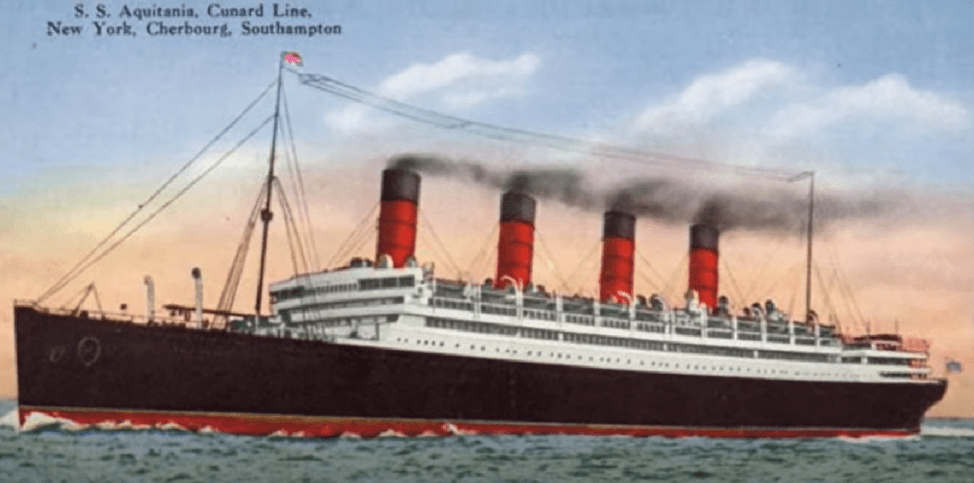
Finally, the day of departure arrived. Not a send-off day in Detroit, but a day of departure from the Harbor of New York. A huge four-pipe liner, painted in the characteristic colors of the Cunard Line Company: cherry – below the waterline, black – above it, with brick color pipes – took passengers on board. This cruise was dominated by second and third classes. Due to the depression, many cabins on the ship remained vacant, but the convenience of the famous ship and the lack of prohibition on board the English liner, made the trip across the Atlantic profitable for the company.
“Look, Michael, how beautifully are decorated the salons,” Bob said happily, “That’s despite the ship’s service during the war.”
“They earn so much that very easy can change the interiors of the liner. I like the contents of the bar and the absence of blacks most of all, as if we are already in Russia.”
“There is a lot of booze in Russia, but everyone is equal, and you can’t even laugh at black people.”
“You’re kidding! They are simply absent there, that’s where the rules of equality come from. The second class is fed in the restaurant of the first, and we are fed in the dining room of the second, because there is no first class on our cruise, and not because all people are equal!”
“Maybe so. We’ll see it in Leningrad.”
Three weeks passed before they got there. The beauties of the city were of little interest to friends. An agent was waiting for them at the port. He checked the entry visa stamp, and put them on a Moscow train car. And in Moscow they were met by an agent’s assistant and transferred to another train at another train station.
The blow was waiting for them in the city of Gorky. No one met them, and it was necessary to act on their own.
“Auto factory! Auto factory,” they repeated until a man in uniform led them to the square, where a dashing driver in a wrecked car took the risk and take the next Americans to GAZ.
The plant greeted them with a familiar layout – it exactly repeated the plan of the Ford factory in Detroit, from where they had recently been fired. They paid the driver in rubles, since the agent explained to them in Leningrad that it was illegal to store or exchange dollars in the USSR, and this could lead to trouble. The agent himself exchanged their dollars for rubles, and, as Michael suspected, made a good profit. But now the friends were pleased that they didn’t have to shake the green ones in front of the driver’s nose. Who knows where he could take them to?
“If this plant was built by Ford managers, then we both know where the administration building is. Let’s go there and be hired.”
Indeed, they were not mistaken. On the way, they met the Americans, who confirmed the right direction and advised them to accept any position.
“Often better positions are vacated, you can always upgrade yours,” they advised.
Satisfied with their right choice of work in Russia, Bob and Michael went to the personnel department, where they were quickly dealt with.
“If you agree, there are several vacancies on the assembly line, you can go to work even today on the second shift. If your engineer, Miller, confirms your qualifications, we’ll put you on the list of places for promotion. Meanwhile, you need to drive to the American village, not far from here, to where your fellow countrymen live, and arrange accommodation. We’ll call and warn them. The second shift is from three to ten at night. Don’t be late!”
“So far I like this country!” said Robert, “Look how quickly we got hired.”
“Is it true that lunch at the factory and the hostel are free?”
“Let’s get settled for the night first and then ask fellow Americans.”
They were quickly taken on a brand new “Model-A” to an ordinary American village, where American engineers and workers lived in separate houses for two to four families, and where hostels for singles were arranged. The village had a bathhouse, a hairdresser’s, a laundry, a canteen, a post office, a school, a hotel, a grocery store, a club-cafe and the NKVD house.
“A bed in a hostel is free, at the expense of the plant,” the local manager of the village told them.
“Is it true that they serve lunch for free at the factory?” could not resist hungry Michael.
“Yes, it is true, but many of ours are tired of beet and cabbage soup, from which there are a lot of gases.”
“You should put silencers on your ass,” Michael joked.
“You want to live in a hostel. If you shoot a lot, your neighbors will put a silencer on you,” the manager laughed. “But to be honest, many people prefer to buy food here, in the village, and cook themselves or go to our paid canteen. You may use cashless payment from wages. There is a bar and a dance floor. Our guys are friends with Russian girls, yet our women here picked up communist ideas, and they have no problem with love.”
Michael pricked up his ears. So stories about free love are not a fairy tale! It was what he aspired back in Detroit. Perhaps he began to like communism. Robert was more reserved about the news. He was eager to get started and report home to Ida that everything was in order – they had made the right choice.
“Is there a telegraph here?” he asked.
“Yes, of course, at the post office,” the manager assured him. “And now let’s go to the hostel, I’ll show you your room.”
The newcomers settled down on the second floor in a large room with eight beds, bedside tables and wardrobes. There was a table and several chairs in the center of the room. Everything was clean and palls liked the atmosphere. They settled down in the allotted places, hung things in the closet and gathered to refresh themselves in the dining room.
“Do you have working clothes? Did you brought overalls? The local ones are lousy, they wear out very quickly.”
“Yes, sure. We even brought some tools with us.”
“That’s good! It means that you are an experienced mechanics. But the tools here are given for free, you can keep yours for now, especially since the keys do not fit perfectly – here they have the metric system of measures. For a walk from the village to the factory you need a half an hour, so leave at two – you will not be late for the start of the shift by three o’clock.
Thus began their work at a car factory in the city of Gorky.
And, the further, the more correct seemed to friends their decision. Work at the plant was familiar to both, the working day lasted an hour less, and the salary was higher than in Detroit. In the evenings and on weekends it was possible to visit a bar, cafe, dancing. And there were no problems with dating. The first time Michael rented a room in a small motel in the village. But his hostel friends laughed at him,
“Are you making love all night? Why do you need a room? Four of us are always on the evening shift, one of us is your friend, he’ll guard outside. Calculate yourself what is cheaper – three whiskeys or a room for the night?”
But it turned out that women solved this issue even better. Soon men knew all the women-employees, many had housing, and gradually this issue lost its urgency. And in the warm season, the green surroundings of the Oka were simply indispensable for picnics and meetings for two.
But surprises had also happened sometimes…
One day, riding a small boat for two, Michael and Robert noticed in a large boat with four rowers, a black guy Terry Brown, an apprentice from Detroit. The helmswoman on that boat was Michael’s former sweetheart.
“It can’t be real! I can’t believe my eyes!”
I told you there were blacks here,” Bob said.
“Here’s an asshole, let’s catch them up and scare him!’
They began to row in turn, but it was impossible to keep up with the four rowers of the large boat. The evening was ruined. And not just an evening.
Michael got a new hobby – looking for Terry Brown. He did not live in the village, did not appear in the canteen of the car factory, and it was not possible to check all the shops. Then Bob advised to find out in the personnel department where their “friend” works. So they did. It turned out that Terry works as a worker in the foundry.
“Damn it! And he was a simple assistant in the wings. He fooled everyone! That’s right, you need to talk to him,” said Bob.
And once, having chosen a suitable shift, friends met Terry near the checkpoint.
“Terry, hi! Long time no see! How did you manage to get in here, you trickster. And even become an experienced caster?”
“What do you guys want from me? Have we had problems before? It seems not. When did you become racists?”
“Racism has nothing to do with this. A lot of great mechanics are just out of work, and dodgers like you are spoiling their reputation.”
“Get away from me, I’m not spoiling anybody’s reputation. Everyone is looking for a better job.”
“True. Your place is in Louisiana. Look for a job there, not here!”
“Everyone is equal here, and you are not a mentor for me!”
“Oh, you son of a bitch! If I see you again, I’ll kick you in the neck!” Michael hissed.
It was unreasonable to start a brawl in front of hundreds of workers, including Russians. And Michael didn’t have a clear plan. What can he actually accuse Terry of? Of his good job? This is competition! You can, of course, complain, but what does he know about Terry? And what if he finished the courses, acquired the qualification? You should make inquiries. Through whom?”
“Ask the girl who was with him, do you know her?” Robert advised. “Although if I were you, I wouldn’t give a damn about either of them.”
“No, no, I will definitely talk to Masha. Can you imagine if she met him before me? And then kissed me with her lips? Oh God!”
After a couple of weeks, Michael managed to meet Masha in the factory canteen.
“I’d like to invite you to a bar for a chat,” he said.
“But I don’t want to go to a bar with you. Our friendship is over. I have a new boyfriend now, and I know everything: you and your pal bully him for nothing, just because he is black. And if you won’t end it, remember, it will be bad for you, not for him! You probably don’t understand, we don’t have slaves, everyone is equal, and he is no worse than you, and in some matters – much better! Just believe my female experience.”
“What a slut!” Michael got angry, “And besides it, Terry complains to her. She could not made of a worse thing than to offend my manhood. Well, now Terry’s over!”
Michael decided to talk to the black guy so seriously that he himself would like to change his job. Soon, rowing competitions were held on the Oka-river. Terry participated in race, and the American team overtook the Russians for first place.
“Damn, it’s even harder to fight a champion,” Michael thought.
He did not know that Terry also lives in Social city, attends of a Russian language school, and he was nominated to the district Council of People’s Deputies.
But today all the participants of the swim were invited to the cafe-bar of the village to celebrate the results of the regatta. Michael decided to watch for Terry after drinking. Robert was dissatisfied with the fuss of his friend, but he could not leave Mike.
“Look, Mike, I’ll be there and keep Terry from kicking your ass, but I’m not going to punch him with you either. So be correct, tell him what you think is right, and back off.
Michael decided to do just that.
“Only to scare him!” he thought.
“Hey, Terry, I want to congratulate you on your victory!” he barked at the whole bar.
Many voices supported Michael.
“The team is good, and the boat is what you need. But the gear – not so much. I would advise changing the ropes to stronger ones, you yourself know why.”
Terry was already under the influence. Forgetting that all around him were whites, he yelled at Michael,
“You lousy racist and Ku Klux Klansman! You threaten me with a rope! Better keep an eye on your wife who’ in Detroit…”
“Bang!” a blow to the face followed. Terry did not remain in debt. Bob intervened, and the three of them grappled into a bunch, which screamed and waved with six arms. In the midst of the fight, the door opened and two men in the military uniform of the NKVD appeared in the doorway. Frightened Masha was looking out from behind them.
“Here they are, I told you! They wanted to deal with Terry, because he is black and a communist! And they both hate communists! They specially entered the factory to harm our country! I immediately told Terry: “Go where you need to! Complain!” But he didn’t want to, he was shy.”
Friends were taken to the house of the NKVD in the village, which always puzzled them with its purpose. Now, finding themselves in a well-equipped cell, they realized that in vain they laughed at Russian carelessness. In the arrests, efficiency was at the highest level.
Questioning the eyewitnesses confirmed the testimony of Masha and Terry: friends threatened to kill the black guy, and hints of a strong rope meant only one thing – hanging. And since Terry was a candidate for the district council, the case became not just racial, but also political.
Co-workers of Smith and Jones testified that the defendants did not have any racist statements or intentions to kill a black guy, but it was obvious to the officers that they were simply shielding their compatriots.
Engineer Miller characterized his workers positively and even tried to bail them out, but he was refused this, promising that he could defend racists and anti-communists at trial, but would this serve the cause of cooperation between countries and would not it affect the duration of his contract?
Robert and Michael were transferred to the city jail and a few days later, after interrogations, in which they denied everything and praised the country, the city and the car factory, they were introduced to an elderly, one might say an old man, with a goatee beard, lawyer named Rittenberg, who agreed to defend them.
“I confess to you that the picture is not simple,” he said, “On the one hand, the criminal aspect is minimal, and they can’t charge you with anything but a fight. However on the other hand, the political aspect is grave. You can even be accused of sabotage and connections with the White Guard or Trotskyist centers of America. Do you have passports and citizenship in order?”
“Yes of course!” assured the Americans, frightened by the events.
“That’s good! As citizens of America, you should be handed over to US justice, and then I’ll finally feel that you are secure.”
“What does it mean to hand over?” Robert asked.
“Send to America.”
“That is, how is it “to send us”? We came here to work, we cannot leave. This will reflect very badly on the well-being of our families.”
“My dear clients, you simply have no idea how bad it can be for you and your families, if you choose to stay here.”
“And how many months in prison can a person get in such a case?”
“A hundred and twenty! Would that suit you?”
“Cuc-koo!” Mike said thoughtfully.
“In my opinion, you yourself are a cuckoo! Robert got angry. “We must listen to the defender. You already disregard an advice once and asked for troubles. And you got them. And I’m with you. For the second time, I do not intend to get Russian hard labor instead of working at the factory for a good salary. You do as you wish, and I’ll do whatever the defender advises me.”
The investigation and interrogations lasted another two and a half weeks. Then the trial took place. By the decision of the court of the Auto Factory district, the defendants were found guilty of politically motivated sabotage at the Gorky Automobile Plant, propaganda of racism, threats to life and beating of the deputy of the district Council Terry Brown. The perpetrators were sentenced to ten years in labor camps. However, taking into account the foreign citizenship and remorse of the defendants, the sentence was replaced with the one month of imprisonment and deportation from the USSR to their homeland. The month of their stay in prison was counted as a term of punishment, so the deportation was carried out immediately.
After the end of the trial, Smith and Jones were handed their suitcases with belongings, balance of their payrolls from the car factory and were taken to the train station. A policeman accompanied them to Moscow, where he was replaced by another policeman to Leningrad. There, they were handed over to the port police before boarding the ship to England.
How many times friends thanked fate that they bought round-trip tickets in advance. But financially business in Russia turned out to be a collapse for them. Six months later, engineer Miller returned to Detroit with his first-class mechanics. His support helped friends return to the factory, as well as the depression gradually ended. Henry Ford earned almost nothing from business with Russia, however, he managed to maintain his factories and facilities, and from 1935 he began to produce a new class of cars, the Model 48.
The “intensification of the political struggle”, mass arrests and disappearances of ordinary people forced Americans to rush to the US embassy for visas to home. Alas, the compatriots were denied this: none had two dollars to pay the fee, and when they left the embassy, black NKVD cars called “Black ravens” were already waiting for them.
Brown was arrested and taken to Moscow for interrogation. He thought it was because he was black, but it was quickly explained to him that in the USSR everyone is equal. The same thing happened to the white workers. They organized resistance to the authorities and were arrested and charged with anti-Soviet propaganda and agitation. The court sentenced them to various terms of work in labor camps in Siberia.
Only one type of answer came to inquires of families from America: the workers took the citizenship of the USSR and got lost at the construction sites of the five-year plan. The American village became empty, and the English camp appeared in the expanses of Siberia, from where choral singing in English was sometimes heard, but traces of this place were lost in history…
EPILOGUE: MIAMI, 1974, DECEMBER
Two quite elderly men in loose-fitting floral shirts were drinking beers at the Pier 66 Bar and Restaurant in Fort Lauderdale, Florida. The sun gently warmed the air to 25 degrees Celsius in a cloudless blue sky. The sounds of Irving Berlin’s “White Christmas” caressed the ear.
“When did we first rest here, in the fifty?”
“Yes, five years after the war…”
“Daisy has always liked it here.”
“Ida too…”
They sat silent for a while, remembering the passed wives and the time when they were no longer young, but from the current year they seemed to themselves men full of strength.
Michael Jones paused, chewed with his lips, and for the umpteenth time in his life asked his old friend Robert Smith,
“Do you remember, Bob, how unlucky we were in Russia in 1934?”
“Of course, Mike! How can one forgot such bad luck?”
 Nick Neim's Stories