A fiction short story
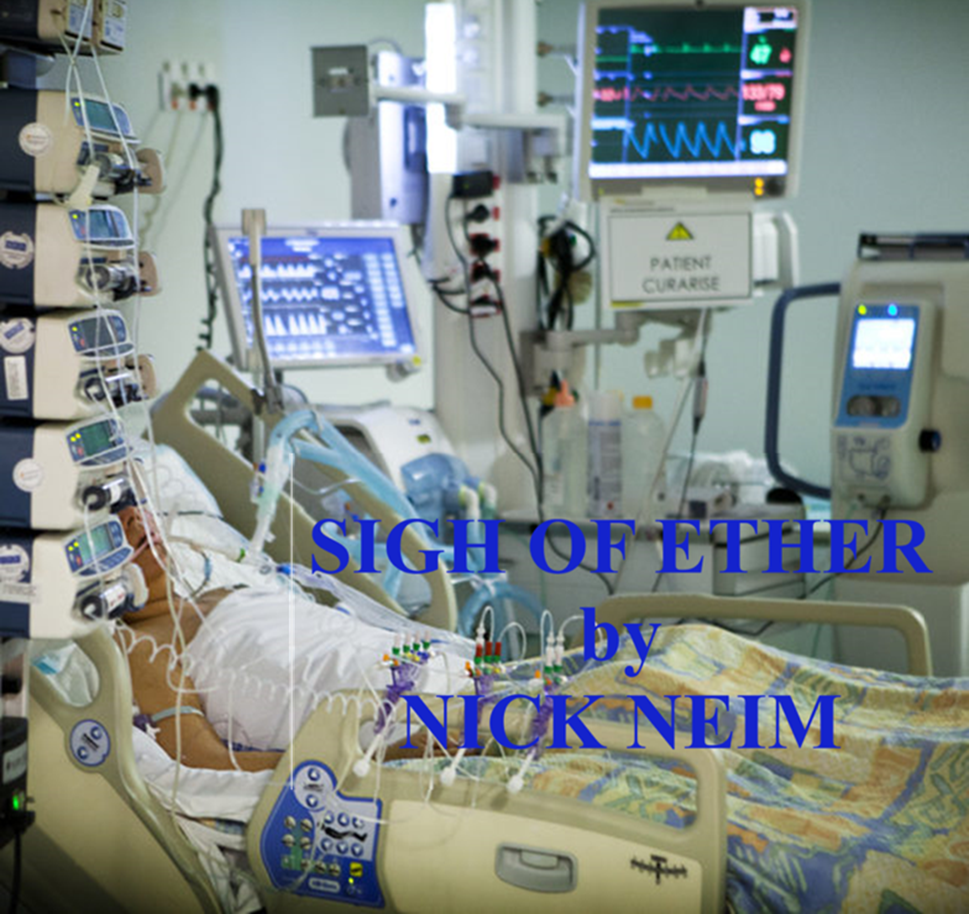
Dr. Simon Ether left the room and no rushing walked to the nurses’ station. Now at the counter he will write down his observations and recommendations in the patient’s medical history. Perhaps not all observations. Moreover, not all thoughts about what is happening…
This was the second time in a week when he was filled with some kind of almost mystical confidence that the old lady patient would never wake up or regain consciousness again in her long and difficult life. But neither his medical education nor his sanity allowed him to write down “fell asleep forever.”
Who could say with certainty that “forever”? It was just a forecast, a prediction. But if such forecasts come true twice a week, he won’t have work here. The fact that he did not announce a “code blue” and did not call the rescue team, despite the absence of a fluorescent sticker “DNR! – Do Not Resuscitate!” on a folder with a medical history in his hands, would work against the standard of care. Moreover, against him personally! The information would have leaked to the press, and the nicknames like “Kevorkian-2” or “Doctor Death” would have become inevitable for him.
It always seemed to him that most families refuse the DNR sticker so as not to doom a loved one to the indifference of the medical staff to the suffering and requests of the patient, and not at all out of a desire to break a couple of ribs and shoot a high-voltage discharge at a beloved ancestor. From his point of view, to remain silent about the fact that the patient fell asleep and, according to the idiotic assumption, would not wake up again, was, much more reasonable than anything else. There was no need to torture old people in vain or prove to a pack of ignoramuses and loudmouths that you were not involved, and that “after does not mean as a result”! At the same time, Simon felt that he could predict such events accurately, say, with a very high probability.
What reason did he have to think so? Only personal experience. While still in the residency, Sy, as everyone called Simon, noticed that old women (less often – old men), bedridden, in unconsciousness, sometimes grabbed his hands and held them without letting go. Despite the rush and the need to run, carrying out endless orders from attending doctors and senior residents, he could not pull his hands out of the tenacious grip of seniors. Physically, he could, but he couldn’t permit it!
Each time he saw a picture, inspired by his father’s story, of how he, as a boy, was leaving for evacuation, and his mother still wouldn’t let go of her hands. And then there’s a jerk, and he’s already in the carriage, watching through the cloudy glass as his mother disappears, running along the platform behind the train.
Sy did not believe in genetic memory, but being a caring young man, he imagined himself in his father’s place many times and each time he felt pain for him, for his mother and for himself…
So in the ward, the doctor staying next to a decrepit patient with a breathing support apparatus and a feeding tube drawn from the stomach through the abdominal wall to the outside, plastic bags with solutions of salts and antibiotics pumped into collapsing, fragile veins, felt like he is the last defender of this creature from electric shocks and aimlessly broken ribs during resuscitation.
What could he do? Nothing! What was he doing at her bedside anyway? The hospital life style required the assessment of all patients for rehabilitation, physical training and physiotherapy.
“Hmm,” he thought, “it looks like she would be better off sleeping peacefully forever.”
One can only examine the patient and make sure whether she has bedsores, although this is what nurses and their assistants do when they change the sheets and diapers every day. And, after all, she has a treating doctor. She does not require any exercise or therapy. Is this news to anyone? Nutrition – parenteral, through a tube.
The only possible recommendations are to continue observation and call a rehabilitation specialist if the patient’s condition changes. To transfer promising patients to a rehabilitation department, unpromising patients to a special department for three months to care for seriously ill patients, and doomed patients to a hospice for the dying. But the deadline has not yet came.
For now, the hospital’s medical department receives money from insurance. So calling a rehabilitation specialist to a patient in critical conditions is formal saying,
“Look how attentive we are to people’s problems! We do not allow an ordinary internist to conclude that a semi-conscious patient is no longer fit for physical or occupational therapy, but we leave this thoughtful conclusion to the rehabilitation specialist exclusively!”
This is also a financial step – the insurance will pay the hospital for a consultation with a specialist, the main thing is that the procedure code is correct. But to say that something is being done for financial rather than moral reasons is bad manners, a violation of medical ethics and political correctness.
These thoughts brought him again back to the memories of that first incident in his residency. The patient appeared to be unconscious. In any case, she didn’t talk, didn’t answer questions, and looked like she was sleeping. With a familiar movement, he touched the cold, wrinkled hand, turned it palm up and lightly squeezed the wrist, under the thumb, counting the uneven pulse. And as if in response to his actions, the old woman grabbed his hand with her other hand. Out of surprise, he lost count and softly covered her hands with his palms.
“Don’t be afraid grandma, you are not alone! I am here with you!” he said out loud.
Sy began to stroke her hands, transferring the warmth of his hot and dry palms to these frozen, bony “chicken feet”. Her grip weakened, a calm and even peaceful expression appeared on the face, and something like a smile designed at the corners of her mouth.
“Sleep well, grandma!” he said, and the patient’s hands relaxed.
“We let each other go,” thought Dr. Ether and moved on with his endless resident concerns.
To his surprise, these thoughts turned to be not empty mind. While dispensing evening medications, the nurse discovered that the patient had died and tried to determine who was the last person to see her alive? The doctor’s last entry was his note of pulse and blood pressure in the medical history. After this there were two or three notes from the nurses that the patient was sleeping peacefully.
Cases like that one happened repeatedly. These were always elderly people with confusion and disorientation. Sometimes these were in the rehabilitation department, on their way to a long-term nursing home or hospice. Later, in his last year of residency, as a senior resident, he consulted for attending physicians in other departments. Same cases happened there too.
Usually the purpose of the consultation was to determine whether it was worth transferring the patient to the rehabilitation department for physical therapy, or whether patient should go to a special nursing home to live out his or her life… And always some old women and old men clung to his hands, and he calmed the patients, stroking their hands, and accompanied them into their last sleep.
Maureen, a nurse in the second rehabilitation department, once noticed that the resident, Doctor Ether, was pampering seriously ill old women with his handshakes and started a rumor that he had healing bio currents in his hands.
“Just look how cute this obnoxious Mrs. Frog has become since she was in the hands of Dr. Simon Ether. Yesterday she tried to pull the needles out of her veins twice before they tied her to the bed. And today she lies calmly and smiles after the doctor held her hands. He is a hiller, I bet! Sy, can you massage me with your hands? Today I am at night!” she suggested, smiling playfully.
But all these events had been in the past. After finishing his residency, he worked in another hospital and no one here had yet joked about his hands. But Sy had no doubt that such events would be repeated. Today’s incident was well known to the doctor. He was sure that the patient’s body would be found cold. Although, if relatives unexpectedly show up to see her, as happened only once in his memory, they will find her still warm. But who could blame loved ones for callousness and rare visits to a dear person who has lost the ability to communicate. Especially when they have work, home, children and things that are just eating them alive!
Doctor Ether came to the nurses’ station where patients’ charts were kept, plopped down on a chair and made a short note that the patient was on a breathing support machine, under sedatives, disoriented, with a confused consciousness. Vital signs – respiratory rate, pulse (albeit uneven) and blood pressure were within normal limits.
“In case of patient’s conditions improves, a repeat consultation is recommended as well as a transfer to the rehabilitation department. Otherwise will follow a transfer to a long-term shelter or to a hospice for hopeless patients.”
Before Sy finished his notes, he heard someone breathing and whispering behind him,
“Sy, is that you? You’re here now? Cool! Then you can’t hide from me or escape doing massage.”
He turned around. It was Maureen. Smiling as always, in an ironed snow-white uniform that fitted the nurse’s rounded forms just perfect.
‘Hello, Maureen! I didn’t know you are working at this hospital.”
“I just recently switched here. And you?”
“This is the second year after residency.”
“And how is this place? Do you like it?”
“Like everywhere else. No worse and no better.”
He did not want to show his true attitude towards the profession of rehabilitation specialist, which seemed artificial to him. Is specialization really necessary to allow a patient to use the bedside commode toilet? Of course no! But that’s not how the system works.
Just as the PM&R attending in the rehabilitation department can prescribe antibiotics to his patient, an attending in medical or surgical department can prescribe exercises, can assess the ability to get out of bed and use the toilet to their patients.
However, no one will do this – “exceed their authority.” Everyone will just follow the standard of care. They will call each other for consultations, and insurance will pay for it all. And action without consultation will not be paid, since the doctor must treat own patient anyway. But, if a specialist’s consultation is often important and relevant, a call to assess the physical status and a primitive prescription “from bed to potty” always brought a bitter smile to Simon.
Typically, medical doctors covered themselves with reasoning,
“What if, after my permission, the patient falls and, God forbid, breaks his leg. How will I answer for allowing him to use a bedside commode-toilet without the experience of a rehabilitation specialist?”
And how will a rehabilitation specialist respond to a patient’s fall? Will his specialization predict how the patient’s blood pressure, mental status, coordination, blood composition and a bunch of factors will change that caused hesitation in his step, loss of balance and weakness in his hands gripping the railings and commode handrails?
Research will begin on the tests performed and, most likely, changes will be found that will somehow explain the change in the patient’s status and the cause of the fall. A common accident. No one will be responsible, although this will spoil the hospital statistics. All this does not depend on who gave permission to use a commode.
“I’m glad I met you, Sy. I always felt calm when you were on duty. The head nurse told us that Dr. Ether is reliable. In case of a difficult veins, he will take blood; he prescribes necessary meds even in the middle of the night and calls for help not afraid to wake up the attending doctors on duty. How often are you on duty? I’ll ask to switch into your shift.”
“Only four times a month, as I work twenty hours a week in the department. I’m part-time. They don’t have any more space yet. But I even don’t want to work full time in the hospital.”
However, there was a problem with working in office. All of Sy’s familiar medical doctors promised him in unison that they would hire him in their offices as a rehabilitation consultant. However, the rosy picture of working in a few friendly offices quickly dimmed.
Having opened their offices, fellow medical doctors soon realized that Sy would have to be paid for consultations like “lower back massage twice a week,” while their licenses were no worse for such a purpose. The likelihood of harming the patient with a massage is extremely small, so they will somehow cope with it themselves.
Now, if Sy rented an office from them, where he brought them new patients, it would be a different matter! True collaboration! All that was left for Sy was to find his patients. Well, only poor pensioners could be found in the hospital… Although it seems that he himself has been found by Maureen…
She was a pretty girl, but she very openly tried to become a resident’s girlfriend. As Dr. Patel, Sy’s chief resident during his first year in rehabilitation, said about her,
“Do you want to fly high? Be careful, like the birds – one wrong step and you will either be ringed or put in a cage!”
The guys laughed, but listened. Those who ended up in rehabilitation after preliminary surgery did not believe the cautious Hindu.
In surgery, different morals reigned, although there were many girls there who dreamed of becoming doctors’ wives. The hard life of all the personnel – long hours of work, blood, pain and stress, reminiscent of military conditions, led to quick relations, without any ulterior motives, only as mutual aid. Almost all surgical residents who entered residency, as in war, had permanent “field wives”, which the recruits acquired during the first year. John, Sy’s chief resident during the preliminary surgery year, advised otherwise,
“The sooner you, young fellows, find a permanent girlfriend, the better you will study our difficult craft!”
Better or not better, but definitely calmer. New residents spent the first six months dealing with stress.
For example, imagine a foreign doctor who has never worked in an American hospital in his life and, to his own unspeakable happiness, is accepted into a surgical residency. And during the rounds, the attending surgeon unexpectedly addresses such a lucky person,
“Go and be back in no time, OK in a time of a fart! Bring me a 20 cc (or ml) syringe and peroxide. We’ll wash the patient’s wound and bandage it.”
The lucky one instantly jumps out of the room and… falls into the abyss of horror! Where can he get all these everyday surgical items?!
“Anna, Maria, Christina!” he shouts in panic the names of all the nurses he knows from different floors. “Please, help!”
The nurses at the station react immediately.
“How can we help you?”
“We urgently need a 20 cc syringe, a needle, peroxide and dressing material.”
“Easily! The second door to the right is a storage room for medical supplies.”
The doctor runs full speed to the storage and… Oh, shit, there’s a lock with a code on the door! He rushes back, screaming,
“Code, code! What’s the code for the supplies storage?”
“Calm down, doctor! It cannot be shouted to the entire floor. It is very simple: 1-2-3-4.”
The doctor runs back, immediately dials the code 1-2-3-4 on the lock and breaks into the storage room. A second shock awaits him there – boxes with inscriptions and numbers up to the ceiling. Which one contains bottles, which one contains syringes, which one contains needles and where can he get dressing material?
On the third attempt, in a semi-fainting state, the doctor drags along the most good-natured nurse from the station (fortunately, it’s not far), and she explains to the newcomer where everything is, and how to use the folding ladder and how to unlock the cabinets with sterile bags.
Ten minutes later, the resident, laden with packages, returns to the ward, where there is no one except the patient. A hail of reproaches and ridicule awaits him somewhere further down the corridor, and the chief resident, who has already received a scolding from the attending doctor, promises to rot him in the operating room.
To rot has nothing to do with bacteria. Opposite, it means being sent to a sterile operating room as a third assistant in a row for several operations, one after another, so that you begin to fall from fatigue and pray to the God of surgery not to let you shamefully plop your face into an open surgical wound.
But to be fair, there were also decent doctors. Dr. Bullitt, perhaps speaking from his own experience, says,
“You, Si, apparently had too much whisky to drink yesterday – you can barely stand on your feet. Go lie down “here” for an hour while we operate.”
“Here” is not far away. In the corner of the pre-operative room there is a pile of used linen: sheets and surgical scrubs taken off the tables and surgeons who operated before you. There is no time to stand on ceremony – you fall on this heap and fall asleep in the middle of your flight down, and someone’s voice is already trumpeting the rise – an hour has flown by in a second!
Sy could remember similar stories in amount to fill a car, or maybe just a small cart. After all, they had been forgetting like bad dreams, but something completely different remained in the memory. Kind words that healed the emotional wounds of the surgical residents. And not just words…
Sy met Lydia during a rotation in the surgical ICU (intensive care unit). An energetic young woman, divorced, a knowledgeable nurse – the surgeon could not have found a better candidate for a girlfriend.
And Sy would never have found her if he got to practice at the ICU earlier. He was lucky – Lydia had only been divorced for two weeks, and she herself was stressed about it.
She and her husband did not have children, which is why the husband demanded a divorce, and they had divorced relatively quickly. Fast, but not painless. One day in the operating room, Ether noticed tears in Lydia’s eyes.
“Poor Mrs. Smith. She survived the accident, but lost her husband and daughter! Almost like me…” she said, “I don’t know what’s better!”
“Have you been in an accident?” Sy was amazed.
“Not literally. My husband left me due to infertility.”
“Precisely established?”
“Yes, absolutely.”
“Have you tried to adopt a child?”
“It’s very difficult, but I tried and once even found a wonderful girl. But my husband flatly refused. They were twelve brothers and sisters, and he also wanted to have a bunch of kids. His own children.”
“Don’t lose hope. You are beautiful and kind, and you will still have a husband and a child!”
Sy sympathetically took Lydia’s hand and shook it lightly. The nurse looked up at him, her eyes sparkling with tears in the rays of the bright surgical lamps.
“Thank you. Your hands are… what everyone needs! Warm and… friendly,” and after a pause, she sharply switched the topic,
“Did you make an entry in the medical history? With all the orders and meds? Then let’s take the bed and drive it to the ICU!”
Their friendship began from this insignificant episode. Lydia fed the always hungry Sy sandwiches a couple of times. There was no time to invite her to the cafe. And then Christmas came.
“Where are you celebrating?” Sy asked Lydia, who was running along the empty evening corridor, looking like the Snow Maiden in a white fur coat.
She stopped and looked at him with her clear eyes,
“At my parents’ house. Where else? And you?” she smiled.
“At home. But only Christmas day tomorrow, not eve tonight. Today I’ll be on duty until six in the morning, then I’ll go to my apartment, sleep a little and drive home,” Sy smiled in response.
“Well, Merry Christmas!”
“And to you! Be happy!”
Sy pulled Lydia slightly towards him, bent down a little and kissed her on the lips. The girl did not resist.
“Like this? Straightaway?” she asked.
“Yes! Why wait? Christmas is a piece of happiness!”
“I’ll tell our pastor. He’ll like it. Where do you rent an apartment?”
“In the high-rise building opposite the hospital. Apartment 4K. Studio.”
“Do you want me to come to you in the morning?”
Sy’s breath had caught. He noticed that he was nodding his head like a circus horse during a parade, and Lydia was laughing, looking at him.
In subsequent years, Sy often recalled their short but vivid romance. Lydia was teaching him local life, customs, and language. He told her about life in his country, about his family, about various interesting things. The most important pleasure, of course, was intimate meetings – something that the novice surgical residents were completely deprived of, because sleep became their main passion!
Working without sleep for forty hours left no strength for anything. Even driving your car home was a great danger for both drivers and pedestrians. Therefore, almost all surgical residents did not live at home, but rented sleeping places near the hospital. That’s why chief resident John always advised to quickly find your guardian angel, “your” nurse!
Alas, Sy had “his” nurse for four of the last six months when he worked in a hospital, far from home. Two months were spent for rotations in other hospitals, where it was much easier to work and from where it was much closer to travel home. Sometimes Sy thought about Lydia’s sad fate, but he had no idea how to leave her.
“You know,” said Lydia, “I am very pleased with the affair with you and do not pretend to anything more. Now I know what I should look for in a future man – care for all loved ones and … electric hands like yours. You know, I have a personal interest in them.”
Sy knew. Lydia successfully underwent a lumpectomy – removal of a tumor in her left breast and a course of radiotherapy. She had been healthy for two years, but for some reason she believed that a mysterious healing power lay in the hands of her new friend.
“It’s like there’s electric discharge coming from them!”
“What are you talking about, it’s us who are electrified by our clothes and your fluffy hair.”
“No! You already forgot how you explained to me about electricity. If it were electrification of the whole body, then the electric shock would not come from the hands, but from another place. And I feel your hands as signals, no matter where you touch me. It was you who started the heart of the deceased, didn’t you?”
“I told you: before I even put pressure on his chest, he woke up. He had just a temporary cardiac arrest!”
“Okay,” Lydia laughed. “It is you who have a temporary “stop”, but your hands radiate constantly. Stroke my chest while you’re resting.”
Sy was not arguing. His stop, indeed, happened temporarily.
But time passed, and the year of preliminary surgical residency ended, turning into the first year of rehabilitation residency. The first working day ended at four! This was a luxury unprecedented in surgery, simply fantastic, and Sy, in a suit and tie, completely unusual clothing for a resident, rushed to his old hospital to show off to his friends. The resident surgeons grinned wryly, envious of his appearance and freedom, but Lydia literally burst out with joy.
“Will you wait for me, Doctor Ether? I will be free in short time. I want to invite you to a special place, an upscale restaurant.”
Sy did not argue in vain. He didn’t want to eat, but he was curious to get to know the unusual place. He would have gladly invited Lydia to a hotel instead of a restaurant, but it was her idea, a surprise, and it was impossible to spoil it. The main inconvenience was two cars – each had their own. He didn’t even know that she had such a luxurious auto; he was usually interested in completely different things.
Lydia parked outside the restaurant, and Sy had to turn over the corner and drive almost two blocks before he found a spot. It’s was a bit far, but without a meter, so free. He almost ran back to the restaurant.
He had been led to a table where Lydia was already leafing through the menu.
“When you finished your residency, I decided – this is it! A wonderful story, although the ending is too abrupt and mundane. Not at all like in the movies. But you unexpectedly came back to see me, and I thought, “What if this is a sign from above?” and I decided to invite you to my favorite restaurant. My parents celebrated my sixteenth birthday there, and my father presented me with my first car there.”
Sy wanted to start a conversation, ask about her father, about her family, but the waiter jumped up to them and excitedly asked if the police were taking away their car. Exactly! Lydia’s brand new Jaguar was already being hooked up to a tow truck by crane.
“The meter has been paid, what’s the matter, officer?” Sy asked the traffic officer at the street.
The policeman silently pointed at the sign prohibiting parking from four to six. It was five minutes to six – a bad luck.
“Let me pay the fine, and you let the car go,” offered Dr. Ether.
The policeman grinned slightly,
“In addition to the fine – $400 for towing!”
What a shit! Like a surgical residency.
“Alright. I’ll pay the fine and towing.”
“It still won’t work,” the policeman grinned full mouth. “You’ll also have to pay for storing the car in the police garage. If you make it before eight tonight, you’ll pay for the day; tomorrow – for two days and so on. Here’s the address.”
“Don’t worry, Sy,” Lydia said. “You know what I believe in and who I rely on. We tried in vain to change something what was already set above.”
They got into Sy’s car, which was safely dozing two blocks around the corner, and went to the address across the city to the area farthest from them on the outskirts. They managed to get the car that same day, but Lydia resolutely refused the money from Sy.
“A sign from above – was not you, it was a fine. It’s for me in lieu of paying for the lunch.”
They never saw each other again.
Sy was overloaded with the new residency, its problems and concerns, completely different from surgical ones; not with dates, but by life with his own wife, children, household joys and worries as well as all sorts of his medical and scientific matters.
The meeting with Maureen stirred up memories of his years as a resident and of Lydia, who had disappeared forever from his horizon. But some instinct told the doctor to stay away from the nurse. Only one thought confused him – Maureen was of Creole origin, and he had never dated dark-skinned beauties, as well as not beauties too. But despite the temptation, he promised himself not to fall for women’s tricks, let’s say, “As long as it succeeds!”
A couple of months have passed. Maureen sometimes found herself on the day shift, and even once looked at him suspiciously when the head nurse was finding out who of the doctors was the last to see Grandma Becker alive.
“I have no doubt that it was you! By the way, we’ll be on duty together on Tuesday night, hiller,” Maureen whispered in his ear.
Sy did not explain her that the last person to examine the patient Becker was not him, but Dr. Miksha Raj, whom everyone called Dr. Mishka. In anticipation of the death of her charge, she quickly performed a test of the electrical activity of patient’s extremities nerves. The nurses will figure it out anyway.
“Do I need this adventure on my head?” Sy thought with mixed feelings. Remembering Dr. Patel’s review of the nurse, he had no intention of having a relationship with her, despite her beauty and excellent figure.
No, an intrigue at work with a nurse who is determined to have an affair with a doctor and use this for personal gain would be terribly stupid and could lead to completely unexpected and undesirable consequences.
A determined feminist could ruin his reputation. And not only with accusations of harassment, but also with violations of medical practice. Dr. Ether was not at all worried that he could in any way be accused of secret euthanasia, but the very fact of proceedings on this issue would be completely undesirable. And, mentally saying goodbye to the floating opportunities, Sy firmly decided not to allow any flirtation on Tuesday.
Tuesday came four days later, but as if on the next day. There was no sign of Maureen all day.
“Preparing for the evening attack. Hold on dude!” Sy joked at himself. And it turned out to be not so far from the truth.
The nurse started her night shift. Working quickly and professionally, she took over the shift, received a checklist of important measures, made patient rounds, and began dispensing evening medications.
“Today everything is quiet so far,” she told the doctor on duty so that the nurses could hear, and then quietly, as she walked, rustling paper and plastic at the nurse’s mobile computerized station, she added,
“I’ll come to see you at one AM.”
Sy opened his mouth to say that he would be busy writing an article and preparing a report, but the nimble Maureen had already dived into the room with a beaker of pills for the restless Mrs. Pelotti, and all he could do was “to shut his mouth” and to cough couple of times embarrassedly under the watchful gaze of the night sitter.
“What a persistent wench!” he thought. “But she’ll sneak into the office, and nothing but an emergency will stop her. I can, of course, pretend to be asleep and not to answer her knock, but what if somebody is looking for me? At the end of the day, I’m here to answer nurses’ questions and resolve their concerns about patient care.”
He considered it unforgivable cowardice to sneak off to another department for a supposedly “urgent overnight consultation” on physiotherapy or rehabilitation, a word for “transferring from bed to potty,” and remained to work in the room of the doctor on duty, equipped with a table and a sofa. At one zero four AM there was a knock on the door.
“Come in!” said Dr. Ether.
It was Maureen. She did not look sparkling, as usual, but timid and frightened.
“Doctor,” she addressed him sternly and officially, “I really need to consult with you, sir.”
This was very unusual for Maureen, who had known Sy since his residency days and addressed him by his first name in private.
“How can I help?” Sy asked.
“I have a problem. I’m afraid of something bad. May I ask you to examine my lymph nodes?”
“Damn it! This is exactly as written in books. Now she will ask you to feel her breast, or even the inguinal lymph nodes,” thought Sy.
He was about to answer that he was not a specialist in oncology and under no circumstances accepts women for examinations in the evening, one-on-one, without a chaperone, but Maureen beat him to it.
“I know in advance what you will say, doctor: that you are not an oncologist and are not going to examine me alone without a chaperone. I, too, have been studied medical situations, but I have something to object to: you have special sensitive hands and I trust them more than the hands of our oncologist Dr. Klein, who gropes men. I could go to Lavinia Small, she’s young and black, but my ex-husband is going to marry her and I hate her! I can’t go to another institution, don’t be surprised – I don’t have insurance, I used my husband’s insurance to get a higher salary. After the divorce, my ex kicked me out of his insurance, and I will only be able to purchase my own insurance in a while.
“Okay, I accept all this,” Sy muttered, dumbfounded by the avalanche of information that poured out on him. “But what’s stopping us from inviting a nurse from the new shift in the morning and conducting an examination in accordance with all the rules of ethics?”
“Here’s what,” Maureen said and pulled back the collar of her blouse.
On her chest was a tattoo portrait of a man made by a skilled artist. Sy immediately recognized the face of the funny, basketball-playing intensive care nurse from the hospital where he did his residency. From below, like the motto of a coat of arms, shone the words – “The best man is a husband!”
“Everyone around will know that I was married and there will be no end to those who want easy love, but it’s time for me to think seriously about family and children.”
Sy feverishly looked for an exit from this situation, but Maureen herself found it.
“Let’s do this, Doc. You turn on your mobile phone to record, I’ll ask you to examine me, and then don’t turn it off until I leave the room. Okay?”
Determination suddenly returned to the doctor.
“Okay, Maureen. I trust you. Show me what’s going on.”
She took off her blouse, exposing her breasts, and allowed him to feel both breasts and armpits. The bust was first-class, but there was a small lump and a couple of nodules in the armpit on one side…
“Maureen, this is serious! You will need health insurance. Contact the union and buy it immediately, don’t waste time!”
“Thank you, Doctor Ether. It’s time for me to return to my post, but if you allow me, I would talk to you tomorrow after my shift, not at the hospital, but at the Starbucks across from the park.”
The next morning, Sy drove his car to the Starbucks located across from the park a few blocks from the hospital. The parking spaces in front of the cafe were not yet occupied, so he quickly parked and entered the cafe. He took two coffees with whipped hot milk, and for Maureen, also with caramel. She soon appeared and headed straight to his table.
“Thank you very much, doc. I should be the one ordering your coffee.”
Sy just waved his hand, “What did you want to talk about, Maureen? Didn’t we discuss everything yesterday?”
“Not all. I want to be treated by you!”
“Are you laughing at me? You need to get a mammogram and, I think, surgery, and the sooner the better.”
“But I don’t want this.”
Sy was amazed.
“What do you mean I don’t want to? What other way do you have? Are you afraid of surgery? Of radiation?”
“My mother died of breast cancer, and no measures helped her. She always wanted to go to the islands and turn to healers, but I talked her out of it. I will never forgive myself for this!”
“I understand you,” Sy said, “but you have to go through grief – on your own or with the help of a psychologist. You have nothing to blame yourself for! Understand that no healers could have helped your mother and will not help you. You need real modern treatment.”
“Sy, I beg you, I need your hands! Everyone knows they are special. I would like you to massage my breasts whenever you can.”
“Maureen, you understand that I would never have refused you if I had even for a minute believed in the power of hands and, in general, in unconventional treatment. You need to seek help as soon as possible! I remember you don’t have insurance. Return to the hospital right now, go to the union, explain that you are divorced and open up insurance. After that… Wait!” said Sy seeing Maureen’s protesting gesture. “After this, you will go to the hospital where I did my surgical residency. Contact Dr. Flynn. This is a very smart woman surgeon. We were friends. She will quickly put your operation day on schedule.
“And they’ll cut off my tit?! Will they scrape the meat off the ribs?!”
“What are you? Nowadays no one operates like that! Is this how your mom was operated on?”
“Yes, it was terrible. From the operated side, her chest looked like a skeleton.”
“You know, she could have had a completely different tumor and a different stage, and it was a different time. Now a disease like yours is treated with a very small incision and removal of the tumor – a small lump. Even the shape of the breast does not changes!”
“Is this what you’re talking about true or just a consolation for a stupid black girl?”
“Of course it’s true! Listen to me – you won’t regret it! This is true for a smart and beautiful girl.”
Maureen stood up abruptly, bent over to Sy, quickly kissed him on the temple and ran away without finishing her coffee.
A few days later, he received a call from Dr. Flynn, a surgeon at his first hospital. Sy was very sympathetic to this sweet woman, although many residents disliked her precisely for her gentleness, which was unusual for the “military conditions” of emergency surgery.
Dr. Flynn dealt exclusively with breast cancer, and the vast majority of her patients, and there were quite many of them, needed a simple operation, a lumpectomy – removal of a small breast tumor.
“How are you, Sy?” asked a melodic voice on the phone. “Are you happy with your new life? I see you have beautiful patients, judging by Maureen.”
“Thank you, Mary, I’m fine. How are you and how is Maureen my nurse?”
“She came on time. She has a small tumor and nodes in her armpit, I hope it is stage two. I sent her for a mammogram with localization. Have you still remember these operations?”
Sy remembered very well Mary and him operated on several patients in a row with the same diagnosis. They all started with an interventional radiologist who, under X-ray, localized their tumors with very thin, long needles, and then, one by one, they entered the operating room, into the hands of Dr. Flynn and her assistant Sy. The operations were carried out quickly and accurately. They tried to immediately apply cosmetic stitches. Sy loved this delicate work.
“I remember everything. Thank you, Mary. I know that you will do everything well.”
“Thank you, Sy. Keep in touch.”
A day later, at work, Maureen whispered to him that she was taking a month off for surgery and radiotherapy using the accelerated method.
“But still, to be on the safe side, promise that you won’t refuse, I’ll make an appointment with you for a breast massage,” and she smiled at Sy with her dazzling smile.
What he had to do? He smiled back and took a deep breath; it was not for nothing that he was called Sigh of Ether.
 Nick Neim's Stories